I'm seeing more and more posts about the importance of digital accessibility, and quite frankly that's pretty awesome! Clearly I'm not the only one.
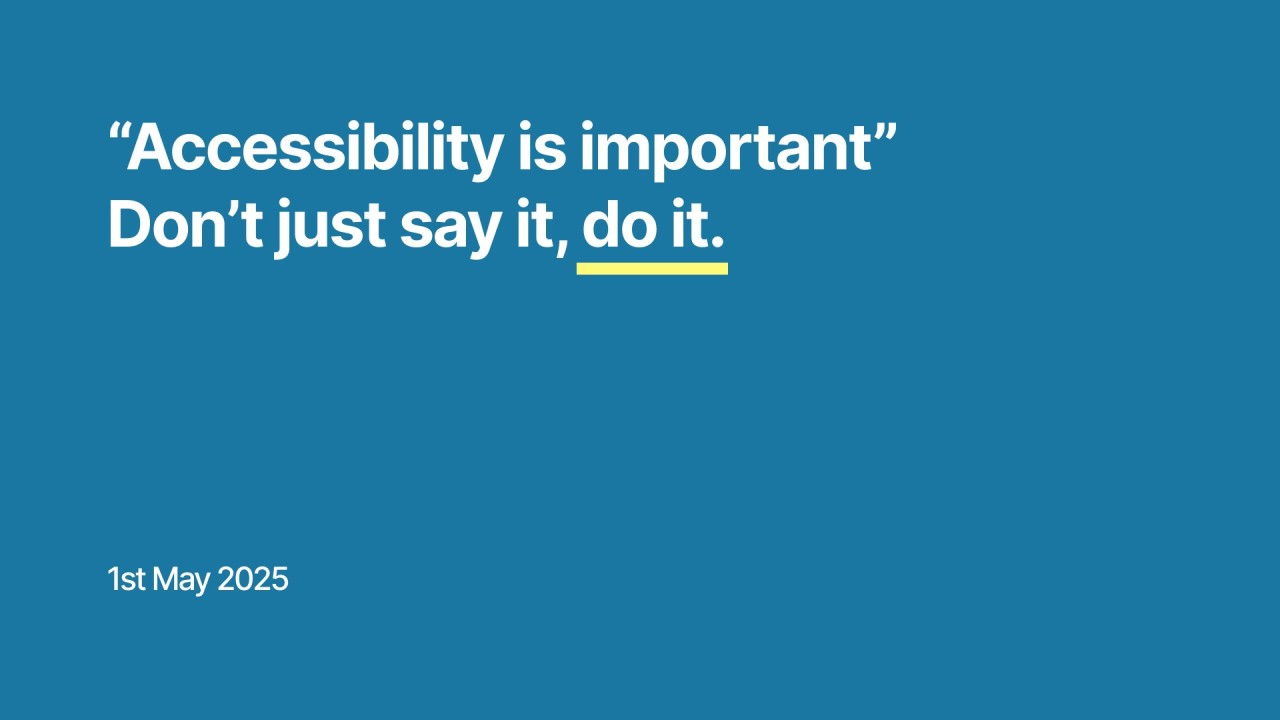
There's (thankfully) a growing awareness that everyone deserves equal access to online information. However, there's a subtle but significant gap emerging: the difference between saying accessibility is important and demonstrating it.
It's becoming increasingly common to see individuals and organisations publicly championing accessibility, yet a quick glance at their portfolio or social media posts sometimes reveals a different story:
- Missing alt text on images
- Colour combinations with poor contrast, or;
- A lack of clear heading structures
None of us are perfect
This isn't about policing, pointing fingers or demanding absolute perfection. We're all on different learning curves, and the world of accessibility is constantly evolving.
Your own digital presence serves as an example of your values — it's often the first thing people see when they Google you. If you genuinely believe in accessibility, your website, portfolio and social media become the prime opportunities to showcase your principles in action.
By making sure your own content is as accessible as possible, you not only benefit those with disabilities but also reinforce your public commitment to inclusivity in a really credible way. Those that know, know this.
So, how can we bridge this gap without sounding accusatory?
Try framing your promotion of accessibility as a shared journey of learning and improvement.
It's really really OK to say "I don't know and I want to learn" or "I found this thing out and I wanted to share it". For me, the tone of educating others when you're not experienced feels awkward and misleading, and it's not cool.
- We can highlight the benefits of accessible design for everyone, not just those with disabilities.
- We can share resources and tips for implementing basic accessibility practices.
- We can lead by example, ensuring our own digital footprints reflect the accessibility standards we advocate for.
Try to move beyond simply shouting #AccessibilityMatters and strive to be seen to be saying it through consistent action.
Practice what you preach, and be honest about it.
This was first published as an article on LinkedIn.
Return to the blog